Monday, 22 February 2016

THEORY AS PRACTISE - BUSINESS LECTURE


Finances


Finances are all abut the control and flow of money.

Money – is a medium for smoothing trade in all things. A measurement method of value, however it is argued that money has no intrinsic value.

Money Has Different Definitions
  1. The cash you have
  2. The cash you have and the cash you can get (e.g. from savings)
  3. The cash you have and the cash you can get plus loan credit
  4. Loan credit either short term or long term
The cost of an item is not always the same price you will pay for that item in store, this is how profit margin is gained. Profit is the positive difference between cost and price, whereas loss is the negative between the both. Income is known as money coming in, as apposed to expenditure which is money going out. Debt is how much money you owe.

Direct Cost - Direct cost is directly attributed tit the overall cost of the item.

Indirect Cost - Cost of any overhead e.g. hardware.

Variable Cost - A cost that varies with output.

Fixed Cost - A cost that doesn’t vary with output.

THEORY AS PRACTISE - BUSINESS LECTURE

Business Firms


Sole Traders

Sole Traders - Self employer individuals. 

Sole trading is still a form of trading today, this could either be in physical product, or services. Sole trading is very easy to start and we recognise it as being popular amongst most freelance designers. When sole trading you must always maintain record of you're trading, failure in doing this will result in breaching the law on tax in the UK. As traded grows, individuals will require more money to develop their trade and this is how a partnership can be formed.

Partnerships

Partnership - Working in a business of 2 or more.

A partnership is when two or more individuals get together with the intent of supplying a good service for pecuniary return (i.e. financial return). Partnerships like sole traders are easy to start, however they can be a bit more difficult to stop this can be due to partnership agreements or assessing how to split the finance of your partnership. Like sole traders you must keep track of you're trading for tax reasons. In a partnership you are jointly liable for each others debts, so trust in your fellow partner is key in this type of firm. Modern partnerships are often more complex, on the other hand limited partnerships provide a limit on debt liability. As a partnership grew it was evident that more funding was needed as trade grew, to attract this funding the government developed the Limited Liability Firm. 

Limited Liability Firm (Ltd)

Limited Liability Firm - Incorporated firm or company.

In an ltd firm the more money you invest into that company will mean the more money you could potential loose out on if the company fails. Having said this the more money you invest into the company the more your trade is able to grow. However, to ensure potential investors are protected against criminals and fraudsters ltd firms must follow certain guidelines which exposed a lot of their company's figures to the audience. This means anyone who wants to can see how your company is performing, this can cause competition issues. Starting an ltd firm can be done through a solicitor for around £200. Stopping an ltd firm can be even more difficult than a partnership due to the firm being regarded by law as "a person". Once again this type of firm became too small to enable investment on a big scale, this is were Public Limited Company's come into place. 

Public Limited Company (plc)

Public Limited Company - Shares of plc's are traded on the stock market.

Debt Issues

All firms will have a degree of debt. In essence they use other peoples money. In order to control your debt you must use other peoples money to make more than the cost of borrowing and running the firm. 

To manage debt effectively you must...
  • Control money flows.
  • Know what has been spent on what.
  • Have a very good idea of what is going to be spent on what. 

GUEST LECTURE - 11/11/15

Fantastic Media (Miles Thorp)


Manifesto

Miles Thorp is a local graphic designer who found himself on placement at Fantastic Media, in which he stayed on whilst studying at university and gained a job at the design agency. Founded by Managing Director Andrew Hobson, Fantastic Media offers clients a full strategic and creative service which includes corporate identity, brand building, advertising, design, public relations, E-business and new media. Fantastic provides the business know-how, technical competence and imagination to create new ways of improving long-term business growth and maximising the return on your investment. This is achieved by combining the team's expertise and deciding what the appropriate mix of mediums will deliver your message most effectively within the budget set. Fantastic Media believes that relationships are vital to producing a successful campaign and therefore by building an understanding and interacting with each and every client, is able to deliver not only an effective end product that meets original objectives, but also one that contains strong design and stands out from other marketing clutter. 

Fantastic Media Works Across:
  • Brand Design
  • Website Design 
  • E-Commerce 
  • Mobile 
  • Email Marketing 
  • Direct Marketing
  • PR
  • Social Media
  • Advertising
  • Presentations & Multimedia 
  • Search
  • Events & Sponsorships 
  • Sales Alignment 
Throughout my time at university and studying graphic design in general, I have experimented with many forms of graphic design such as campaign/advertisement prints to forms such as semiotics. However the format of graphic design I have grown and I'm most interested in is street graphics.
A few people i am particularly found of when its comes to street graphics is a good friend of mine, Scott Carthy. His documentary work of street dancers and sub way dancers in NY city really inspires me and how much a like me and Scott are gives me that extra boost and interest in what he does. He has also won a few awards and been noticed rather early in his work.

a few amazing examples of Scott carthy's work. and a short interview about one of his most recent works.

This image was from the video 'can i come in?' by Scott Carthy.

This image was from his video 'Sons of William' by Scott Carthy.

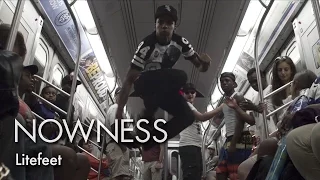
Scott was out in NY city march of 2014 and made a video showing dancers on the subway carts at the same time that a new law was being brought in to stop people dancing on the subway carts. i feel that the first video on this topic was amazing that he had seen further that what the media was showing and saying and he got to show the side from the dancers point of view. His first video for this was called 1050.6(c) and the second was called Litefeet and was working for NOWNESS when they asked him to make a part 2.


Scott then brought out another video/ documentary showing street dancers, the video is called Hitters.
J&Z small.jpg

Scott carthy's online portfolio link is just below.


Analogue Communique

In this session we learnt about typography. Our task was to creating hand rendered typography to communicate a message. Using characters within a specific format we were asked to be creative with our approach to typography and lettering. This was an opportunity to be experimental and playful with ideas and approach, within a prosaic structure.


Having said this we were asked to generate a few rough ideas for type styles on pieces of paper. We also had to remember that we would be creating a strap line for this type, so the type could possible fit the topic of the strap line. My initial ideas are displayed bellow.


Having created my initial ideas it was time to refine them. We had to draw up the type faces we thought was most strongest onto a sheet of paper with a grid system on it. The structure of what the type was going to say always had to begin with "I am" whatever you had after this could represent the type or the individual creating the type. My outcomes are displayed below. 


THEORY AS PRACTICE - BUSINESS LECTURE

Communication Issues


Shannon & Weaver Model of Communication
  1. Sender
  2. Message
  3. Encode
  4. Transmit
  5. Decode
  6. Receive
This model decodes the way we receive a brief from a person. To fully understand what is being relayed to use we must go through all these stages. Only when we have completed these stages we are ready to begin designing.

Mental State

Age 
Sex
Emotion
Memory
Experiences 
Learning 
Social
Psychological 

Above are all factors of mental state which may effect you response to a certain brief.

The Brain

Our brain can also have a big impact on the certain approach we use to answering a brief. It is a well known fact that people who think using the left side of their brain tend to more analytic than people who think using the right side of their brain, due to the right sided people being more creative. As creative thinkers you would think that graphic designers are going to think dominantly on the creative side of the brain, however the person who is delivering the brief may not be. 

Left-Brain Functions
  • Analytic Thought
  • Logic
  • Language 
  • Science & Maths

Right-Brain Functions
  • Holistic Thoughts
  • Intuition 
  • Creativity
  • Art & Music

Attitudes Managers Vs Designers

A managers attitude is always very different to a designers attitude when thinking about a brief. This ties in with the relationship between which side of the brain we use to process an idea. A manager thinks for the long term about a product and how much profit/returns it is going to make his company. Whereas a design will think for the short term and the quality of the product he/she has produced. A manager will always think about company durability when assessing what a design has produced and how it will effect his company, as apposed to a designer which sees the opportunity for building their personal career. 

Below are all the attitudes a manager and designer could have...

Manager
  • Aims: Long-Term / Profit / Survival / Growth / Company Durability.
  • Focus: People / Systems
  • Education: Accountancy / Engineering / Verbal / Numerical 
  • Thinking Style: Serialist / Linear / Analytical / Problem Orientated
  • Behaviour: Pessimistic / Adaptive 
  • Culture: Conformity / Cautions 

Designer
  • Aims: Short-Term / Product Quality / Reform / Prestige / Career Building  
  • Focus: Things / Environments
  • Education: Crafts / Arts / Visuel / Geometric 
  • Thinking Style: Holistic / Lateral / Synthesis / Solution Led
  • Behaviour: Optimistic / Innovative 
  • Culture: Diversity / Experimental 

THEORY AS PRACTICE - BUSINESS LECTURE

Buyer Behaviour


Buyer Behaviour Process
  1. Need Recognition - Felling the need to buy something. 
  2. Search - Searching for the product.
  3. Pre Purchase Evaluation - Assessing the product and what is does against why you need it.
  4. Purchase - The exchange of money.
  5. Consumption - Using your product e.g eating a chocolate bar.
  6. Post Purchase Evaluation - Did you enjoy it? Would you buy it again?
Maslow's History of Needs

Case Study: Stranded In The Desert.

Physiological - Food, Water
Safety - Shelter, Defence
Belongingness - Relationships, Family
Esteem & Status - Power, Respect, Worth
Self Actualisation - Personal Values 

If something happens/changes in this system then humans will drop to the lowest stable system. For example if your town is hit by a natural disaster that wipes out food and water, you would resort to the physiological system.

Advertisement (Thinking Outside The Box)

In the second part of this lecture we were shown a series of advertisement billboards which went beyond your average billboard. The aim of this was to get us to think outside the box as creative thinkers.